
Image SEO: Is Alt Text More Important Than the Image File Name?
SEO Optimization
4
min read
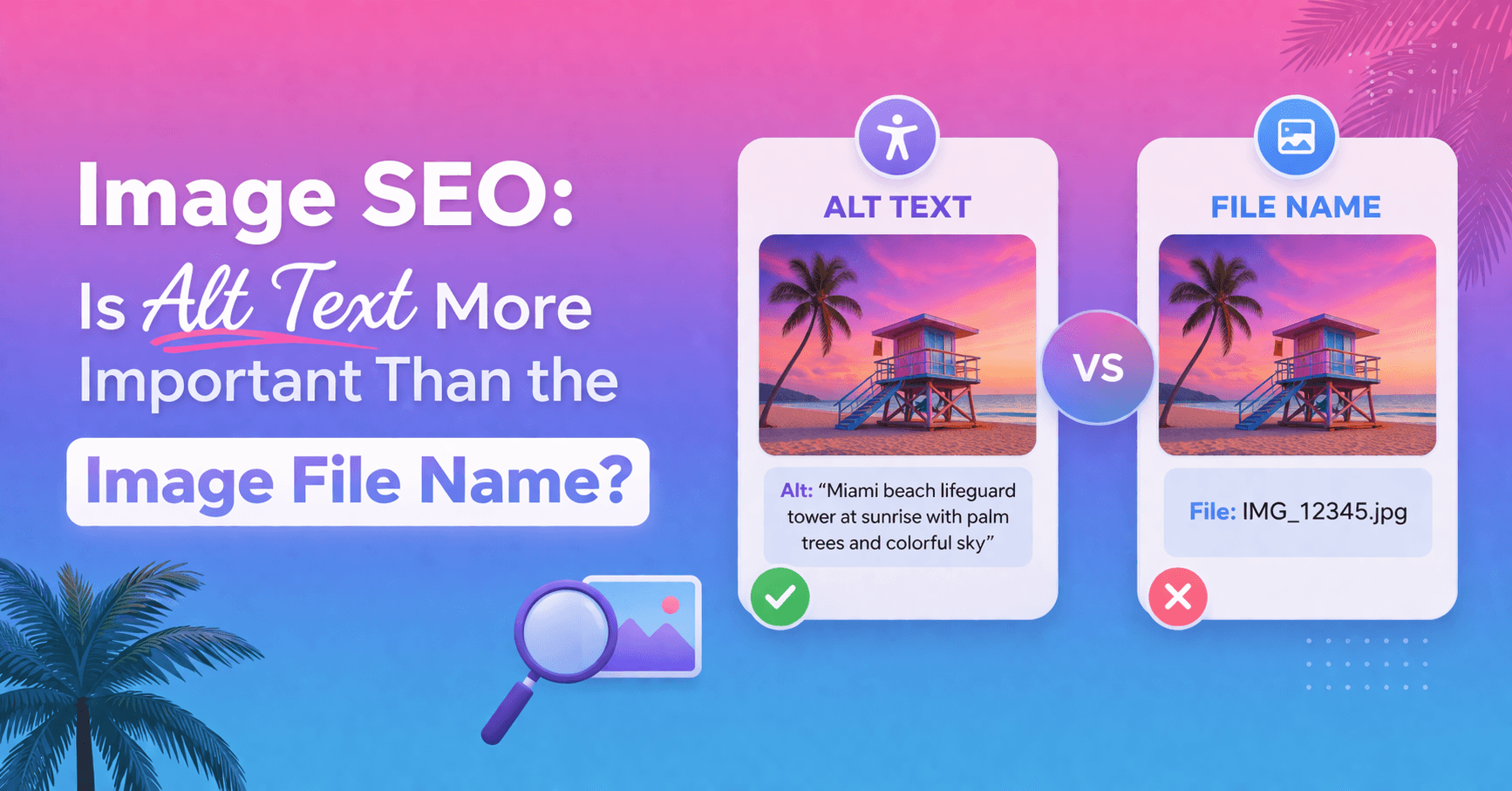
When optimizing a website for SEO, many business owners focus on keywords, page titles, and meta descriptions. But one area that often gets overlooked is image optimization.
A common question we hear at Wisdom Studios is:
“Does the name of the image file matter for SEO, or is the alt text more important?”
The answer is simple: alt text is more important, but both play a role in helping search engines understand your images.
Understanding how these two elements work together can help improve your website’s visibility in search results and even increase traffic through Google Image Search.
What Is Alt Text?
Alt text (alternative text) is a short description added to an image in your website’s code. Originally created for accessibility, alt text allows screen readers to describe images to visually impaired users.
Search engines also use alt text to understand what an image represents.
For example:
Good alt text
Poor alt text
Alt text helps Google understand the image in context with the rest of the page, which can support your overall SEO strategy.
Does the Image File Name Matter?
Yes, but it’s a secondary ranking signal.
Search engines also read the image file name to understand the image topic before the page even loads.
For example:
Good file name
Poor file name
While file names help reinforce the topic, Google relies more heavily on alt text and surrounding page content.
How Search Engines Understand Images
Search engines analyze several elements together to determine what an image represents.
From strongest signal to weakest:
Alt text
Page content surrounding the image
Image file name
Image captions
Image title attributes
This means an image placed on a page about commercial roofing in Texas with descriptive alt text will carry more SEO value than a generic image description.
Best Practices for Image SEO
If you want your images to support your website’s rankings, follow these simple best practices.
1. Use Descriptive File Names
Rename images before uploading them to your website.
Instead of:
Use:
This helps reinforce the topic of the page.
2. Write Clear Alt Text
Alt text should describe the image naturally while including relevant keywords when appropriate.
Example:
Avoid keyword stuffing. Write alt text as if you were explaining the image to someone who cannot see it.
3. Optimize Image Size
Large image files slow down websites, which can hurt both SEO rankings and user experience.
Before uploading images:
Compress them
Use modern formats like WebP
Keep file sizes as small as possible without losing quality
Fast websites rank better and keep visitors engaged.
4. Use Images That Support Page Content
Images should always reinforce the topic of the page.
For example, if your page is about lawn care services, images should show:
Lawn maintenance
Landscaping work
Before-and-after results
Relevant images strengthen topical authority.
3 Image SEO Mistakes Many Websites Make
Even professionally built websites often make these common mistakes.
1. Uploading Images With Default File Names
Images uploaded directly from phones or cameras usually have generic names like:
This is a missed opportunity for SEO.
2. Skipping Alt Text Entirely
Many websites leave alt text fields blank. This removes a key signal search engines use to understand images.
3. Uploading Oversized Images
Large image files slow websites down dramatically, which can impact:
Search rankings
Mobile performance
User experience
Final Thoughts
When it comes to image SEO, alt text carries more weight than the image file name, but the best results come from optimizing both.
By combining:
Descriptive file names
Clear alt text
Proper image sizes
Relevant page context
your images can become an additional asset in helping your website rank higher in search results.
At Wisdom Studios, we build websites that are not only visually stunning but also strategically optimized to perform in search engines and generate real leads.
If you’d like help optimizing your website or improving your search visibility, contact Wisdom Studios today to learn how strategic web design and SEO can grow your business.